

What Makes a Mineral Specimen Collector Quality?
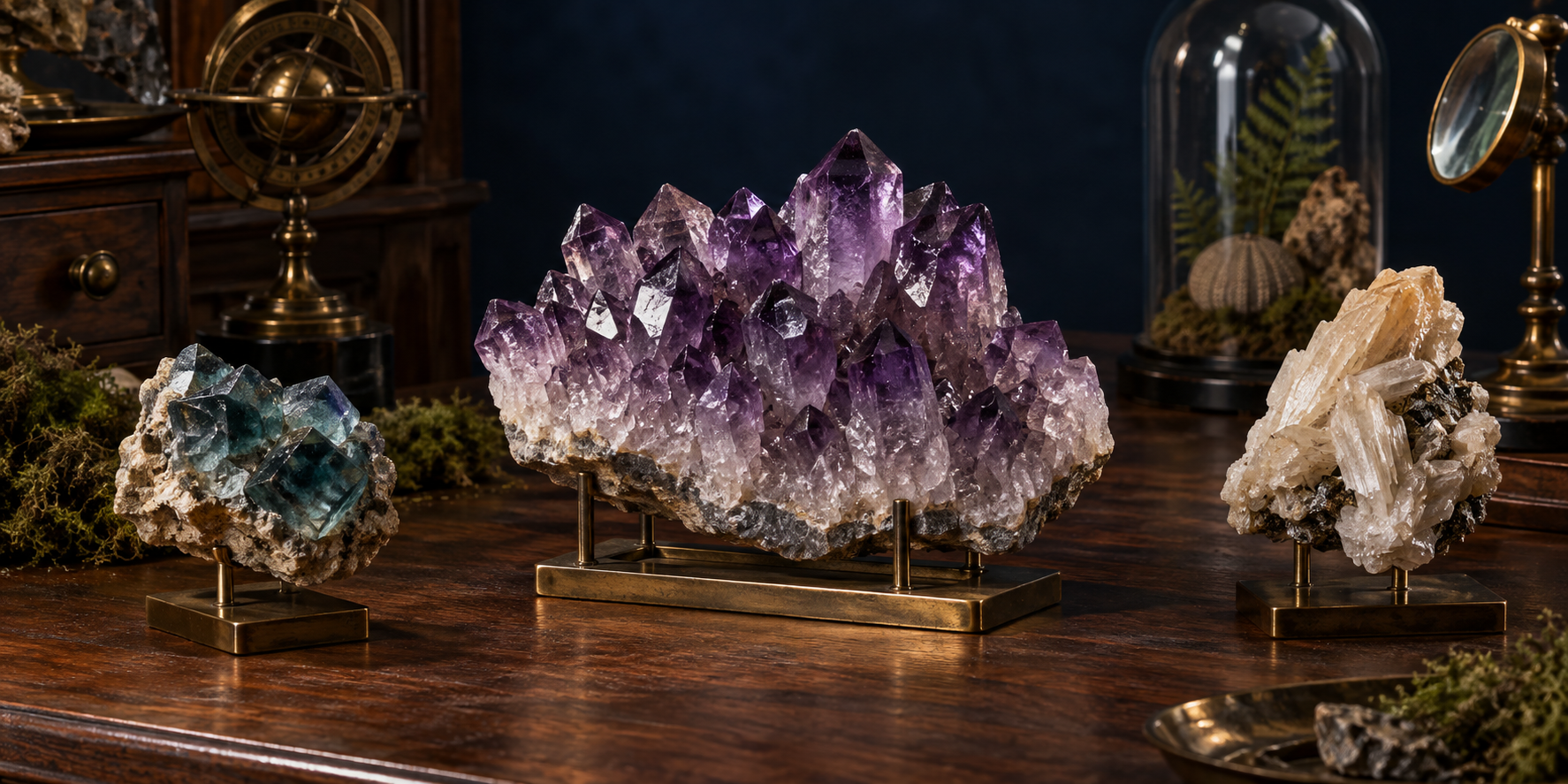
A beautiful crystal can catch your eye in an instant—but what makes a mineral specimen collector quality? The answer is not a single grade or price tag. Collectors usually look at a combination of crystal formation, condition, aesthetics, rarity, locality, provenance and preparation.
Understanding these qualities can help you choose specimens with confidence, whether you are beginning a collection or adding a distinctive piece to an established cabinet.
Formation and crystal definition
A well-formed specimen clearly shows the natural geometry of its mineral species. Collectors often look for sharp crystal faces, distinct terminations and visible growth patterns. The ideal formation varies by mineral: a quartz point is judged differently from a botryoidal malachite surface or a bladed barite cluster.
A specimen does not need to be perfectly symmetrical. In fact, unusual growth habits, inclusions and associations with other minerals can make a piece more scientifically interesting and visually memorable.
Condition
Condition matters because crystals can be fragile. Chips, bruising, repairs or broken terminations may affect desirability, especially when damage interrupts the specimen’s most important feature.
That does not mean every natural contact point is damage. Many specimens separate from surrounding rock along natural boundaries, and some show contact marks from where neighboring crystals once grew. Reliable descriptions should distinguish natural contacts from later damage and disclose repairs or stabilization when known.
Aesthetics and composition
Collector quality is also about the whole composition. Balance, contrast, color, luster and the way crystals sit on the matrix all influence how a specimen presents.
A smaller cluster with strong form and an attractive display angle may be more compelling than a larger piece with less definition. There is no universal formula; aesthetics remain partly personal, which is one reason mineral collecting is so rewarding.
Rarity does not automatically mean quality
A rare mineral can be important even when it is modest in appearance, while a common mineral can be exceptional when its formation, clarity or color is extraordinary. Rarity and quality overlap, but they are not the same thing.
When evaluating rarity, consider the mineral species, crystal habit, color, size and locality together. A familiar mineral from an unusual locality—or an uncommon formation from a classic locality—may carry special interest.
Locality and provenance
Locality tells you where a specimen was found. For collectors, that information adds geological context and can distinguish pieces that appear similar. Some mines and regions are known for characteristic colors, formations or mineral associations.
Provenance is the documented history of a specimen: labels, collection records, prior ownership or other information that supports its identity and origin. Good provenance can add historical and scientific value. When complete records are unavailable, careful, honest labeling is better than unsupported certainty.
Size and scale
Bigger is not always better. Thumbnail and miniature specimens can show remarkable crystal definition, while cabinet-size pieces can create dramatic presence. Quality should be considered within the specimen’s size class and mineral type.
The best choice depends on your collection, display space and what draws you to the piece. Focus on the features you can actually see and appreciate rather than size alone.
Preparation, repairs and disclosure
Many mineral specimens are cleaned or trimmed to reveal their natural form. These common preparation methods are different from undisclosed repairs, coatings, dyeing or artificial alteration.
Ethical sellers describe known treatments and repairs clearly. Ask questions when a listing is unclear, and remember that transparency is part of quality.
What collector quality does not mean
The phrase does not mean flawless, expensive or investment guaranteed. Minerals are natural objects, and many of their most fascinating features—growth interruptions, inclusions, matrix and contact points—record how they formed.
A collector-quality specimen is best understood as a piece with qualities worth preserving, studying or displaying, accurately represented by the seller.
Choosing your next specimen
Start with what genuinely interests you, then consider formation, condition, aesthetics, rarity, locality and disclosure. Look closely at photographs, read the full description and choose sellers who make it easy to understand exactly what you are buying.
Explore our hand-selected crystals and mineral specimens, including our Blue Celestite Specimens and Feathered Dogtooth Pink Calcite—each chosen for natural character, display appeal, and a story worth keeping.
Every Piece Tells a Story.
